Guide
What is Kombucha? An In-Depth Ingredient and Fermentation Guide
Kombucha is a centuries-old fermented tea beverage that combines simple ingredients into a complex, effervescent drink. This guide explains the science behind the fermentation process and provides clear instructions for starting your own home brewery.
Understanding the Core Ingredients
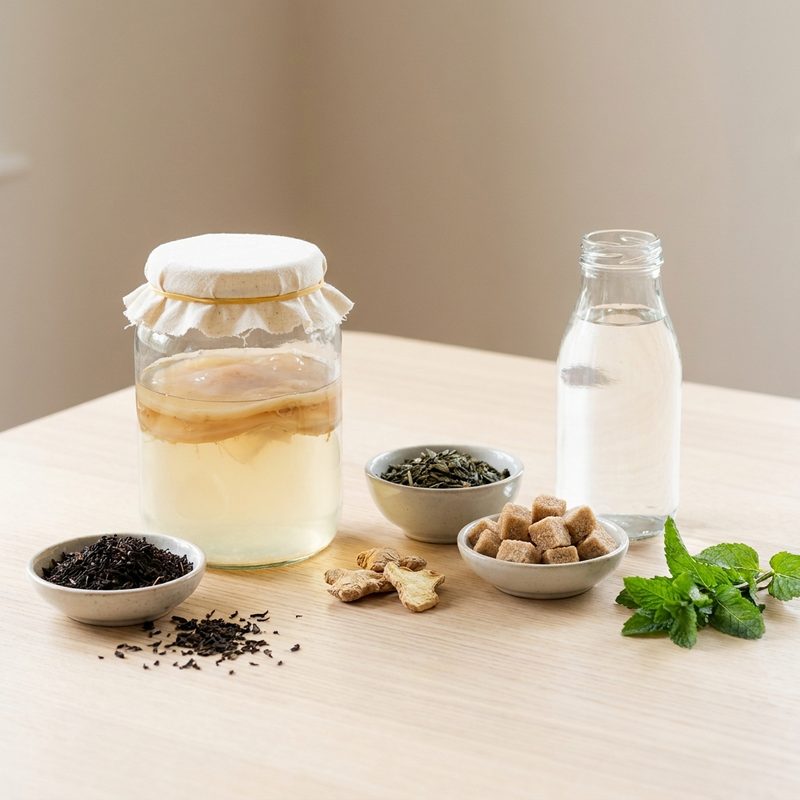
Kombucha begins with four fundamental components: water, tea (Camellia sinensis), granulated sugar, and a SCOBY (Symbiotic Culture of Bacteria and Yeast). The tea provides nitrogen and polyphenols, while the sugar serves as the primary fuel source for the culture. During the process, the yeast consumes the sugar to produce ethanol and carbon dioxide, and the bacteria then convert that ethanol into organic acids, such as acetic and gluconic acids.
The Fermentation Transformation
As the fermentation progresses, the nutritional profile of the liquid changes significantly. The high initial sugar content is drastically reduced as it is converted into organic acids and gases. This process also results in the production of various B-vitamins and enzymes. Unlike traditional cooking which uses heat to break down structures, fermentation uses biological activity to create flavor complexity and a naturally carbonated texture.
Step 1: Preparing the Sweet Tea Base
To begin, boil one quart of filtered water and steep four to six tea bags (black or green tea is best). Dissolve a quarter cup of granulated sugar into the hot tea. It is crucial to let this mixture cool completely to room temperature (between 68°F and 78°F). Introducing a SCOBY to hot liquid will damage or kill the living cultures, halting the fermentation process before it begins.
Step 2: The Primary Fermentation
Once cooled, pour the sweet tea into a clean glass jar and add your SCOBY along with about a half-cup of 'starter tea' from a previous batch. Cover the jar with a breathable cloth secured by a rubber band. This allows oxygen to enter while keeping out dust and insects. Place the jar in a warm, dark spot for 7 to 10 days. The longer it sits, the more sugar is consumed and the more acidic (vinegar-like) the flavor becomes.
Step 3: Flavoring and Carbonation (Secondary Fermentation)
After the primary fermentation, remove the SCOBY. To create the characteristic fizz, transfer the liquid into airtight, pressure-resistant glass bottles. At this stage, you can add fruits, herbs, or spices. The remaining yeast will react with the natural sugars in the added fruit to create carbon dioxide. Since the bottle is sealed, the gas is forced into the liquid, creating natural carbonation. Let these bottles sit at room temperature for 2 to 4 days before refrigerating.