Guide
Understanding Green Tea Compounds and How to Brew the Perfect Cup
Explore the fascinating science behind green tea, from its potent catechins to its unique amino acids. This guide explains how different brewing methods impact the flavor and chemical composition of your daily cup.
The Core Compounds of Green Tea
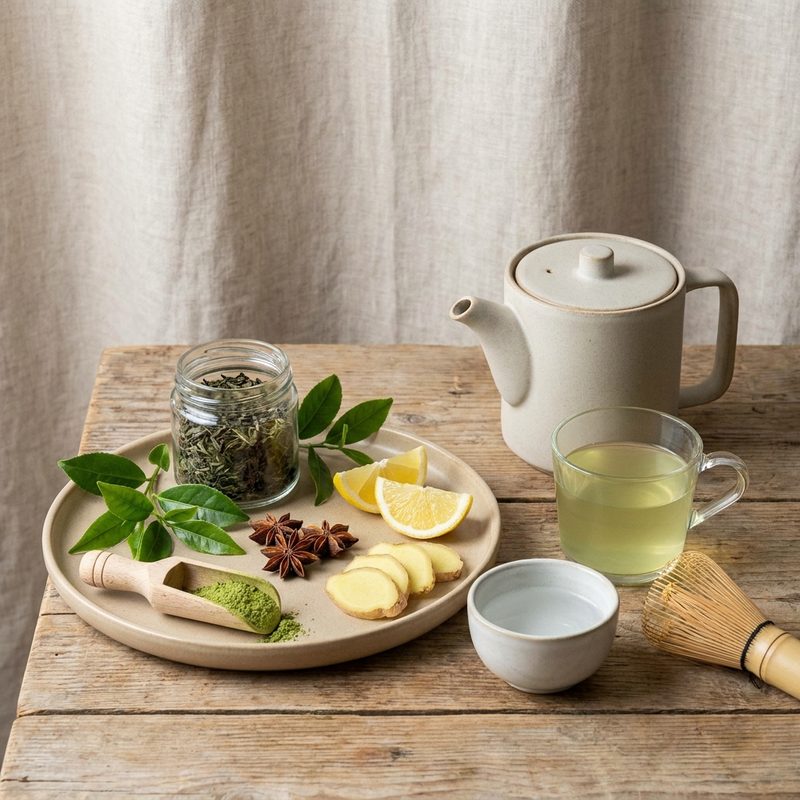
Green tea is derived from the Camellia sinensis plant. Unlike black or oolong tea, green tea leaves are steamed or pan-fired shortly after harvesting to prevent oxidation. This process preserves high concentrations of polyphenols known as catechins, most notably epigallocatechin gallate (EGCG). Additionally, green tea contains L-theanine, an amino acid that contributes a savory or 'umami' flavor profile, alongside varying levels of caffeine and chlorophyll.
Controlling the Water Temperature
To preserve the delicate compounds and prevent an overly bitter taste, water temperature is the most critical factor. Boiling water (212°F/100°C) can scorch the leaves and cause the rapid release of tannins, which results in a harsh, astringent brew. Instead, use water between 160°F and 180°F (71°C to 82°C). If you do not have a temperature-controlled kettle, allow boiling water to sit for approximately two to three minutes before pouring it over your leaves.
Mastering the Steeping Time
The duration the leaves remain in the water dictates the concentration of compounds in the final infusion. Most green teas require a short infusion time of one to three minutes. Shorter steeps tend to highlight lighter, floral, and sweet notes, while longer steeps extract more caffeine and catechins. Always start with a shorter time and taste the tea at 30-second intervals to find the balance that suits your palate.
The Impact of Heat and Storage
Green tea is highly sensitive to environmental factors such as light, heat, and oxygen. These can cause the catechins to oxidize over time, leading to a loss of the vibrant green color and a shift toward a stale, hay-like flavor. To maintain the integrity of the compounds, store tea in an airtight, opaque container in a cool, dark place. When using green tea in cooking, such as adding matcha powder to sauces or batters, it is best to incorporate it toward the end of the process to minimize exposure to high heat.