Guide
How to Support Your Body's Natural Filtration Through Food Science
This article explores the biological reality of how the human body processes waste. We explain why commercial 'detoxes' are unnecessary and how to use specific culinary techniques to support your body's built-in filtration systems.
Step 1: Understand Your Built-in Filtration Systems
The concept of 'detoxing' through a specific juice or tea ignores the sophisticated biology of the human body. Your liver, kidneys, lungs, and skin are constantly working to filter the blood and expel waste. The liver, in particular, uses complex chemical reactions to turn fat-soluble toxins into water-soluble ones that the kidneys can then flush out. To support these organs, the focus should be on providing the specific nutrients they require as fuel, rather than restricting intake to liquids.
Step 2: Identify Key Support Nutrients in Food
Food is composed of macronutrients and micronutrients that act as catalysts for metabolic processes. For example, cruciferous vegetables like cauliflower, Brussels sprouts, and kale contain glucosinolates. When these are digested, they break down into compounds that support the liver's enzymatic pathways. Additionally, fiber—found in the skins of fruits and the hulls of grains—is essential. It acts as a physical binder in the digestive tract, ensuring that waste products are moved efficiently through the intestines rather than being reabsorbed.
Step 3: Master Bioavailability Through Cooking Techniques
How you prepare your food changes its chemical structure and how your body absorbs its nutrients. To support your internal systems, use techniques that preserve or enhance bioavailability. For example, lightly steaming vegetables instead of boiling them prevents water-soluble vitamins (like Vitamin C and B-complex) from leaching into the cooking water. Conversely, cooking tomatoes and carrots slightly can actually increase the availability of lycopene and beta-carotene, antioxidants that protect cells from oxidative stress.
Step 4: Balance Hydration and Electrolytes
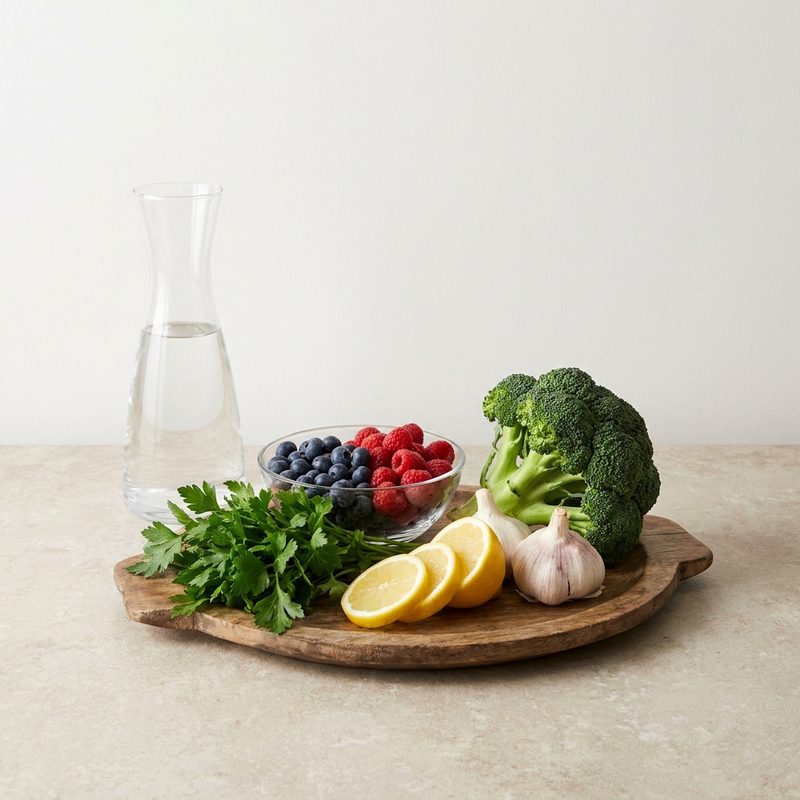
The kidneys require a precise balance of water and electrolytes (sodium, potassium, magnesium) to filter blood effectively. Restrictive 'detox' diets often flush the system too quickly, potentially causing an electrolyte imbalance. Instead, focus on consuming high-water-content foods like celery or watermelon, which provide hydration alongside minerals. This 'slow-release' hydration is more effective for maintaining the steady pressure the kidneys need to perform their filtration duties.
Step 5: Prioritize Whole Proteins over Sugar-Heavy Juices
Many commercial detoxes rely on fruit juices, which are high in sugar and devoid of protein. However, the liver requires amino acids from protein to complete its 'Phase II' detoxification process. Without adequate protein, the body cannot effectively neutralize certain compounds. Incorporating lean proteins or plant-based alternatives ensures that these metabolic pathways have the building blocks they need to function at a high level.