Guide
Understanding Wholegrain vs. Refined Flour: A Practical Culinary Guide
Discover the fundamental differences between wholegrain and refined flours. This guide explores their nutritional anatomy and provides practical techniques for adapting recipes to achieve the best flavor and texture.
The Anatomy of a Grain
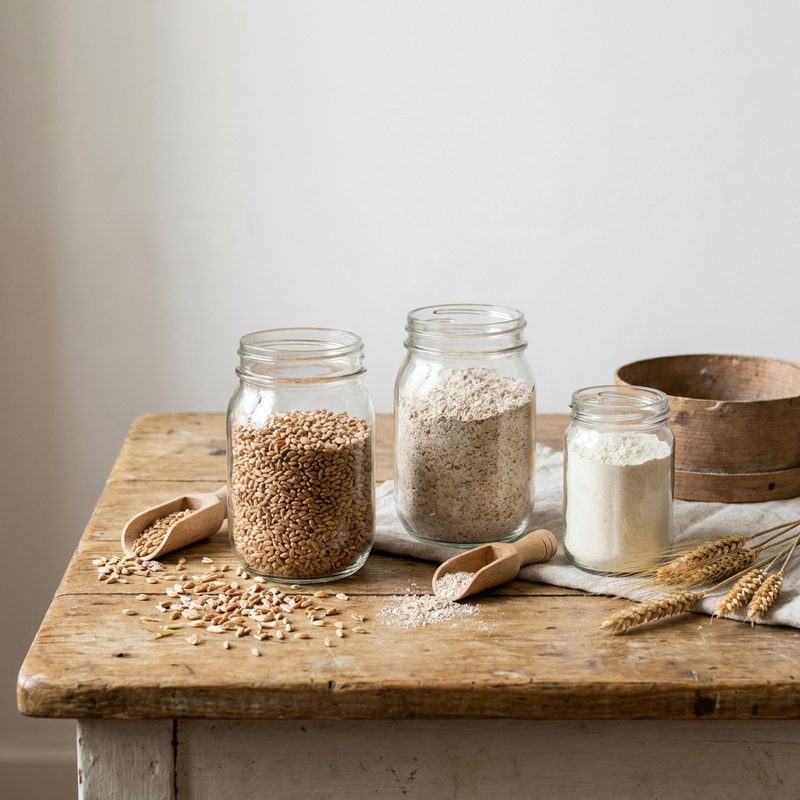
To understand the difference between flours, we must look at the anatomy of the wheat kernel, often called the 'berry.' A whole grain consists of three distinct parts: the bran, the germ, and the endosperm. The bran is the multi-layered outer skin that contains fiber and minerals. The germ is the embryo of the seed, rich in fats and vitamins. The endosperm is the largest part of the kernel, consisting primarily of starch and protein.
Refining the Flour
Refined flour, commonly known as white flour, is produced by removing the bran and the germ during the milling process, leaving only the starchy endosperm. This results in a finer texture and a longer shelf life because the oily germ is removed. Wholegrain flour, conversely, is milled from the entire kernel. This keeps the fiber and nutrients intact but also introduces a coarser texture and stronger, nuttier flavor profile.
How Milling Changes Cooking Properties
The presence of bran and germ significantly alters how flour behaves in the kitchen. Bran particles have sharp edges that can physically cut through gluten strands, which often results in a denser, shorter crumb in breads. Furthermore, wholegrain flour is more 'thirsty' than refined flour. The fiber in the bran absorbs more liquid, meaning recipes adapted for wholegrain usually require higher hydration to prevent a dry, crumbly result.
Technique: Transitioning to Wholegrains
When swapping refined flour for wholegrain, follow a step-by-step approach for the best results. Start by substituting only 25% to 50% of the white flour with wholegrain. This allows you to observe the change in dough consistency. Increase the liquid in your recipe by roughly two tablespoons for every cup of wholegrain flour added. Finally, allow your batter or dough to 'rest' for 20 to 30 minutes before cooking or baking. This resting period, known as autolyse, allows the bran to fully hydrate and soften, resulting in a better texture.
Flavor and Texture Profiles
Refined flour provides a neutral palette and a light, airy structure, making it ideal for delicate pastries and sponges. Wholegrain flour adds depth with toasted, earthy notes. Because of the oils in the germ, wholegrain flour can also provide a more 'moist' mouthfeel initially, though it can become dry if the hydration isn't managed correctly. Understanding these profiles allows you to choose the right flour for the specific flavor goal of your dish.