Guide
Steaming Compared to Roasting: Mastering Heat for Flavor and Nutrition
Understanding how heat interacts with your ingredients is the first step toward becoming a better cook. This guide explores the nutritional differences between steaming and roasting while providing practical techniques for mastering both methods.
The Fundamentals of Moist vs. Dry Heat
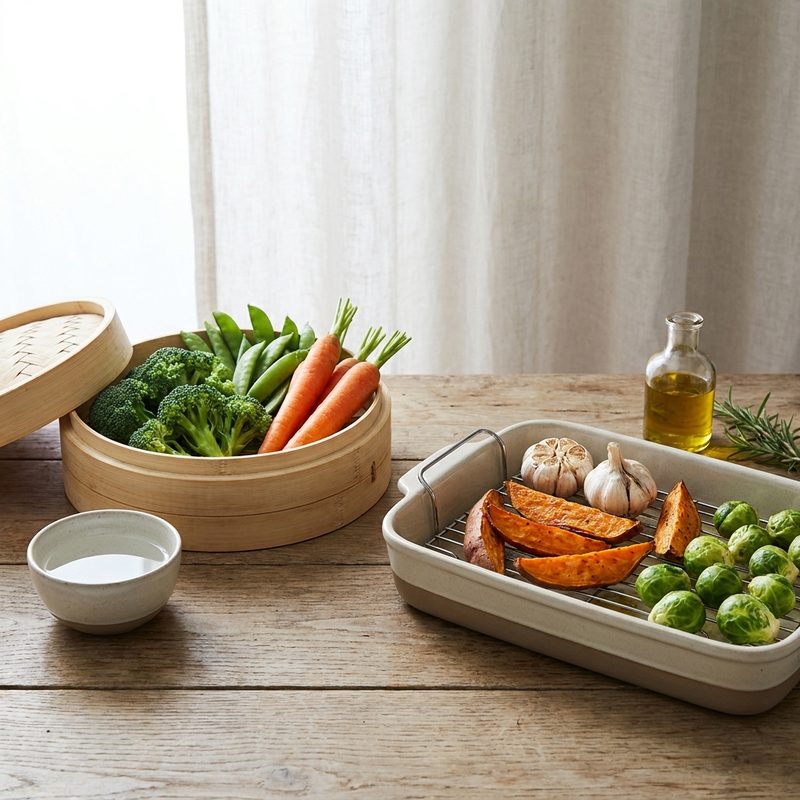
Cooking is essentially the application of heat to change the chemical structure of food. Steaming is a 'moist heat' method, where boiling water turns into vapor that surrounds the food. This process is gentle and maintains high moisture levels. Roasting, conversely, is a 'dry heat' method performed in an oven. It relies on hot air circulation to cook food from the outside in, often leading to moisture loss but creating significant flavor development.
How Heat Affects Nutritional Composition
Food contains delicate macronutrients and micronutrients that react differently to heat. Steaming is widely regarded as one of the best methods for preserving water-soluble vitamins, such as Vitamin C and B-complex vitamins, because the food does not come into direct contact with water. In roasting, the high temperatures can lead to the 'Maillard reaction'—a chemical reaction between amino acids and reducing sugars that gives browned food its distinctive flavor. While roasting can reduce some heat-sensitive vitamins, it can also concentrate minerals and antioxidants by reducing water content.
How to Master the Art of Steaming
To steam perfectly, start by filling a pot with about one to two inches of water, ensuring the water level is below the bottom of your steamer basket. Bring the water to a rolling boil before adding your ingredients. Place your vegetables or proteins in a single layer to ensure even circulation. Cover the pot with a tight-fitting lid to trap the steam. For leafy greens, two to three minutes is usually sufficient, while denser vegetables like broccoli may take five to seven minutes. The goal is a vibrant color and a tender-crisp texture.
Techniques for Successful Roasting
Roasting requires heat management and surface preparation. First, preheat your oven to a high temperature, typically between 375°F and 425°F (190°C to 220°C). Unlike steaming, roasting benefits from a light coating of fat, such as olive oil, which helps conduct heat and promotes browning. Ensure your food is patted dry before roasting; excess moisture will cause the food to steam rather than roast, preventing the desired caramelization. Arrange items on a sheet pan with plenty of space between them to allow hot air to circulate freely around every piece.