Guide
Understanding Sodium and Salt: The Cook's Guide to Flavor and Technique
While the terms are often used interchangeably, salt and sodium are distinct concepts in the culinary world. This guide explores the science behind seasoning and provides practical techniques for managing salt levels in your cooking.
Understanding the Chemical Difference
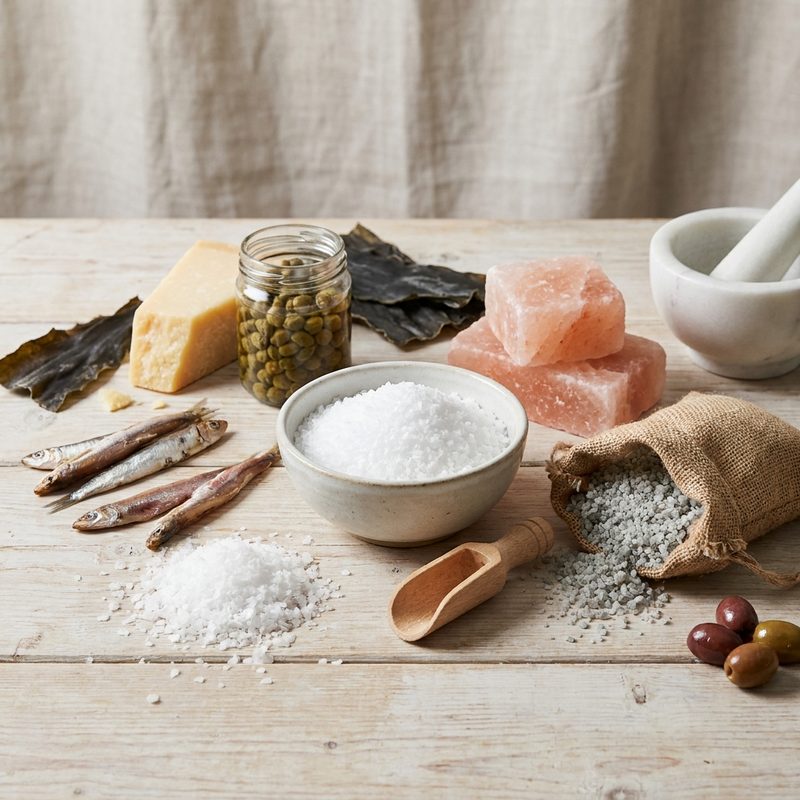
Sodium is a naturally occurring mineral and chemical element. In the kitchen, we rarely encounter pure sodium; instead, we use sodium chloride, commonly known as table salt. Salt is composed of approximately 40% sodium and 60% chloride by weight. When a recipe or nutrition label refers to sodium, it is discussing the specific mineral, whereas salt refers to the granular seasoning we add to our pots and pans.
Sodium in Whole vs. Processed Foods
Sodium exists naturally in many whole foods, including celery, beets, and milk, though usually in small amounts. However, the majority of sodium in a modern diet comes from processed foods where salt acts as both a flavor enhancer and a preservative. Understanding this distinction is the first step in mastering control over your seasoning. By cooking from scratch, you shift the control of sodium levels from the manufacturer to your own hands.
Step 1: Calibrating Your Salt Choice
Not all salts are created equal in terms of volume. Because of the different crystal shapes, one teaspoon of fine table salt contains more sodium than one teaspoon of flaky Kosher salt. To master seasoning, pick one type of salt (like Diamond Crystal or Morton Kosher salt) and stick with it. This allows you to develop a 'finger feel' for how much sodium you are actually adding to your dish.
Step 2: Timing the Application
The timing of when you add salt changes the chemical structure of your food. Adding salt to meat early (dry brining) allows the salt to penetrate the muscle fibers, resulting in a more seasoned and tender interior. Conversely, salting vegetables like mushrooms or eggplant early draws out moisture through osmosis, which is essential for achieving a proper sear rather than steaming the vegetables in their own juices.
How Cooking Changes Salt Perception
Heat and evaporation play massive roles in how salt tastes in a finished dish. As a liquid (like a stock or sauce) simmers and reduces, the water evaporates but the salt remains, making the solution increasingly concentrated. A chef's rule of thumb is to season lightly at the beginning of a long reduction and perform the final adjustment only once the desired volume is reached. This prevents the final dish from becoming unintentionally oversalted.