Guide
The Essential Guide to Comparing and Preparing Nuts and Seeds
This guide provides a clear breakdown of the nutritional benefits of various nuts and seeds while teaching you the essential techniques for prepping them at home. Learn how heat and moisture change their texture and flavor for better culinary results.
Understanding Nut and Seed Composition
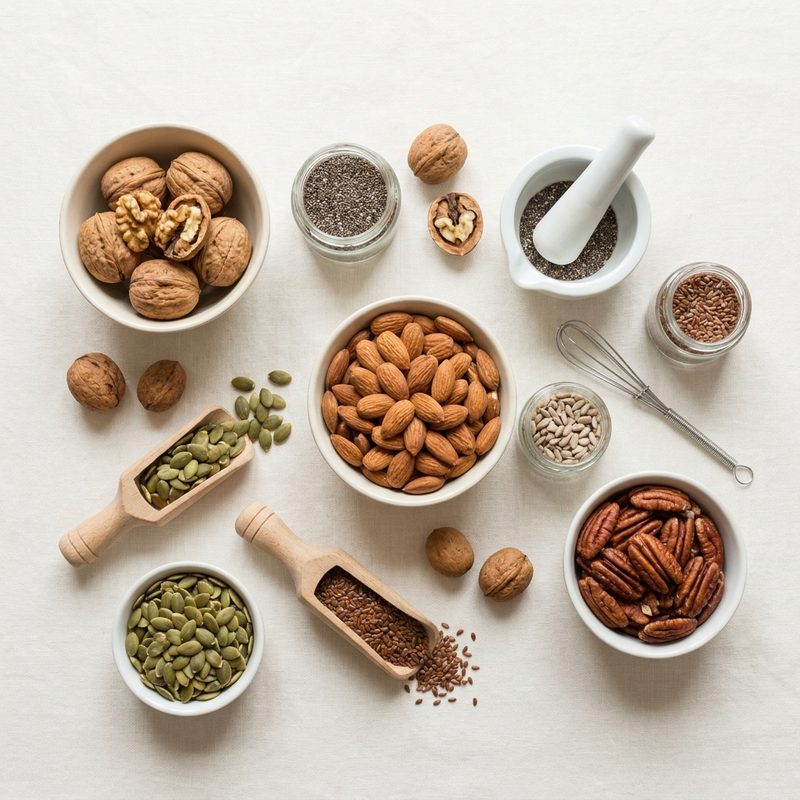
Both nuts and seeds are nutrient-dense powerhouses, primarily composed of healthy fats, plant-based proteins, and fiber. Nuts, such as almonds, walnuts, and cashews, generally have a higher fat content and a denser structure. Seeds, such as chia, flax, pumpkin, and sunflower seeds, often provide higher concentrations of specific minerals like magnesium and iron. From a culinary perspective, nuts provide a crunchy bulk, while seeds are often used for their gelling properties (like chia) or as delicate garnishes.
The Impact of Heat on Nutrition and Flavor
Cooking nuts and seeds through roasting or toasting significantly alters their chemical makeup. When exposed to heat, the natural oils undergo a process that enhances aroma and creates a deeper, earthier flavor. However, high heat can also cause the delicate polyunsaturated fats to oxidize. To balance flavor and nutrition, the best technique is to toast them at lower temperatures (around 300°F or 150°C) for a longer duration rather than using high heat, which can lead to bitterness and the loss of heat-sensitive vitamins.
How to Toast Nuts and Seeds for Maximum Flavor
Step 1: Choose your method. A dry skillet is best for small quantities and seeds, while an oven is better for large batches of nuts. Step 2: For the skillet method, place the nuts or seeds in a single layer over medium-low heat. Do not add oil, as they contain enough of their own. Step 3: Move the ingredients constantly using a spatula or by shaking the pan. This ensures even browning and prevents burning. Step 4: Watch for the visual cue of a golden hue and the olfactory cue of a nutty aroma. Step 5: Immediately remove them from the hot pan onto a cool plate; the residual heat in a heavy skillet will continue to cook them even after the flame is off.
The Technique of Soaking and Activating
Soaking, sometimes called 'activating,' involves submerging raw nuts or seeds in water for several hours. This technique mimics the natural germination process. To do this, place your nuts or seeds in a bowl, cover with filtered water, and let them sit for 4 to 12 hours depending on the density (almonds take longer than sunflower seeds). This process softens the cellular structure, making them easier to blend into creams or milks. It also changes the texture from a brittle snap to a buttery tenderness, which is ideal for raw culinary preparations.
Proper Grinding and Processing
When turning nuts or seeds into flours or butters, temperature control is vital. Because of their high fat content, processing them in a high-speed blender or food processor generates friction and heat. If you process them for too long without stopping, the oils will separate, and you may end up with a greasy paste instead of a fine meal. To achieve a perfect flour, pulse in short bursts and stop as soon as the desired consistency is reached. For homemade butters, continue processing until the oils are fully released and the mixture becomes smooth, but allow the machine to rest occasionally to prevent overheating the oils.