Guide
Macronutrients Explained: A Culinary Guide to Proteins, Fats, and Carbs
Understanding macronutrients is the first step toward becoming a more intentional cook and eater. This guide breaks down the science of carbohydrates, proteins, and fats, explaining how they behave in the kitchen and what happens to them when you apply heat.
Step 1: Identifying the Three Pillars
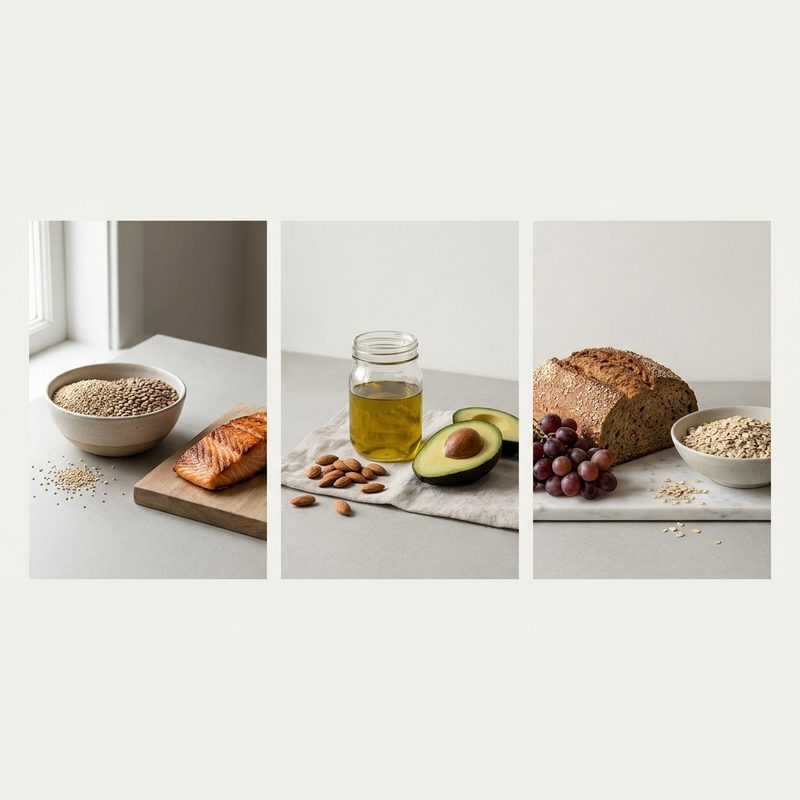
Macronutrients are the nutrients your body needs in large amounts: carbohydrates, proteins, and fats. Each plays a distinct role in both biology and culinary science. Carbohydrates are the primary energy source, proteins are the structural building blocks, and fats provide density and flavor. To begin mastering these, you must learn to identify which foods are dominant in which macronutrient, such as grains for carbs, meats and legumes for protein, and oils or nuts for fats.
Step 2: Understanding Carbohydrates and Heat
Carbohydrates include sugars, starches, and fiber. In the kitchen, how you treat carbs changes their physical state. When you boil a potato, the starches undergo 'gelatinization,' where they absorb water and swell, becoming soft. When you apply high dry heat to sugars or starches, they undergo 'caramelization' or the 'Maillard reaction,' creating the brown, flavorful crust seen on baked bread or seared vegetables.
Step 3: Managing Proteins and Denaturation
Proteins are made of long chains of amino acids. When you cook protein-rich foods like eggs, fish, or steak, the heat causes these chains to unfold and rebond, a process called 'denaturation.' This is why liquid egg whites turn solid and opaque. To master protein cooking, you must learn to control temperature; high heat for too long causes protein fibers to tighten and squeeze out moisture, resulting in tough, dry food.
Step 4: Utilizing Fats for Texture and Heat Transfer
Fats are concentrated energy sources and essential carriers for flavor. In cooking, fats act as a medium for heat transfer, allowing food to reach temperatures higher than the boiling point of water. This is what makes frying possible. Understanding the 'smoke point' of different fats is a vital skill—heating an oil past its smoke point breaks down the fat molecules, creating acrid flavors and losing nutritional integrity.
Step 5: Balancing Macros for Culinary Success
Practical application involves balancing these three elements on the plate. A balanced meal generally incorporates a source of each. For example, a stir-fry uses oil (fat) to sear chicken (protein) and broccoli (carbs/fiber), served over rice (carbs). Learning to balance the richness of fats with the structure of proteins and the energy of carbohydrates ensures a satisfying texture and flavor profile in every dish.