Guide
Leafy Greens Compared: Nutrients, Preparation, and Cooking Methods
Leafy greens are culinary powerhouses that range from delicate to incredibly hearty. This guide explores the nutritional composition of various greens and provides step-by-step techniques for preparing them to maximize both flavor and nutrient density.
Step 1: Categorizing Your Greens
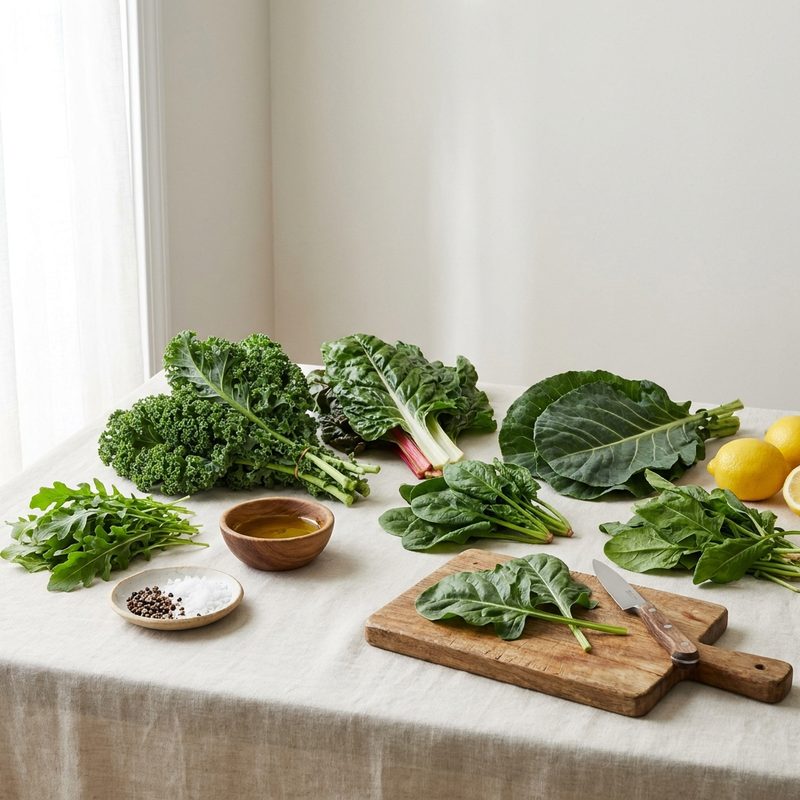
Before cooking, identify whether your greens are 'tender' or 'hardy.' Tender greens like spinach, arugula, and mâche have thin cell walls and wilt almost instantly. Hardy greens like kale, collard greens, and Swiss chard have thick, fibrous structures and require more time or mechanical intervention (like massaging or chopping) to become palatable.
Step 2: Proper Cleaning and Stemming
Leafy greens often harbor grit and sand in their crevices. To clean them, fill a large basin with cold water and submerge the leaves, swishing them gently. Lift the leaves out of the water, leaving the sediment at the bottom. For hardy greens, remove the woody stems by folding the leaf in half and pulling the stem away, or by slicing along both sides of the rib with a knife.
Step 3: Mastering the Sauté Technique
To cook hardy greens while preserving their color, heat a skillet over medium-high heat with a small amount of fat (like olive oil). Add aromatics such as garlic or shallots, then add the damp greens in batches. For kale or collards, add a splash of water or broth and cover with a lid for 2-3 minutes. This creates a steam-saute effect that softens the fiber without boiling away the nutrients.
Step 4: Understanding Cooking Changes
Cooking changes the nutritional and physical makeup of the greens. Heat breaks down cellulose, making the greens easier to digest and increasing the bioavailability of certain antioxidants like beta-carotene. However, prolonged boiling can cause water-soluble vitamins, specifically Vitamin C and B vitamins, to leach into the water. To minimize loss, use quick-cooking methods like steaming or blanching, or incorporate the cooking liquid into a sauce or soup.
Step 5: Finishing for Flavor
Because many leafy greens contain bitter compounds, the final step in preparation is balancing the flavor profile. Once the greens are tender, remove them from the heat and finish with a source of acidity (lemon juice or vinegar) and a pinch of salt. The acid helps to brighten the earthy notes and cut through the bitterness, while the salt suppresses bitter receptors on the tongue.