Guide
How to Substitute Honey for Sugar: Techniques and Nutritional Differences
Understanding the differences between honey and granulated sugar is essential for any home cook or baker. This guide explores their nutritional profiles and provides step-by-step techniques for successfully swapping these sweeteners in your recipes.
Step 1: Understanding the Nutritional Composition
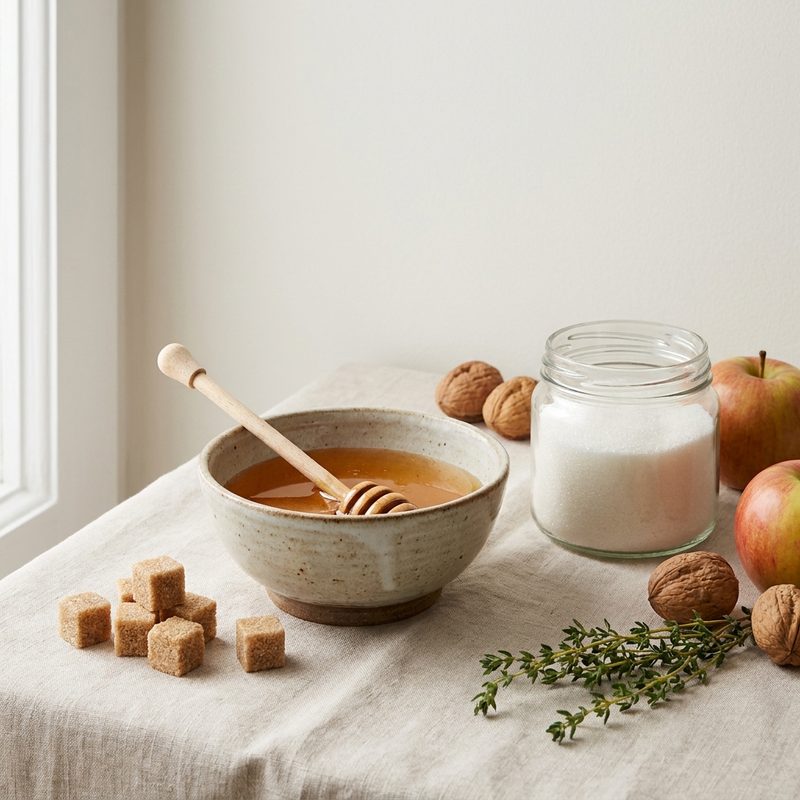
Granulated sugar is pure sucrose, a disaccharide consisting of glucose and fructose bonded together. It is 100% carbohydrate and contains no water. Honey, however, is a complex mixture of fructose, glucose, and roughly 18% water. While both provide energy through carbohydrates, honey is more calorie-dense per tablespoon because it is heavier. Understanding this moisture difference is the first step in successful substitution.
Step 2: Adjusting for Liquid Content
Because honey contains water, you cannot simply swap it 1:1 without affecting the texture of your dish. When substituting honey for sugar, the general rule is to use 3/4 cup of honey for every 1 cup of sugar. Additionally, you must reduce the other liquids in the recipe (such as milk, water, or juice) by approximately 1/4 cup for every cup of honey used to maintain the correct consistency.
Step 3: Managing Heat and Browning
Honey contains higher levels of fructose, which caramelizes at a lower temperature than the sucrose in granulated sugar. This means baked goods made with honey will brown much faster. To prevent over-browning or a burnt exterior, lower your oven temperature by 25°F (about 15°C) and monitor the cooking time closely, as honey-based treats often bake faster.
Step 4: Balancing Acidity with Baking Soda
Honey is naturally acidic, whereas granulated sugar is neutral. This acidity can interfere with the rise of your baked goods or change the final flavor profile. To neutralize the acid and ensure a proper rise, add 1/4 teaspoon of baking soda for every cup of honey used in the recipe. This is especially important in cakes and quick breads.
Step 5: Incorporating into Mixtures
In cooking, sugar is often creamed with butter to create air pockets. Honey, being a liquid, does not create the same aeration. When using honey in sauces or dressings, whisk it thoroughly into the liquid components. For baking, mix the honey with the wet ingredients before combining them with the dry ingredients to ensure even distribution throughout the batter.