Guide
How to Maximize Garlic’s Nutritional Potential through Technique
Garlic is more than just a flavor enhancer; it is a complex ingredient that undergoes a chemical transformation when prepared. This guide explains the science of allicin and how specific culinary techniques can help you get the most out of every clove.
The Chemistry of the Clove
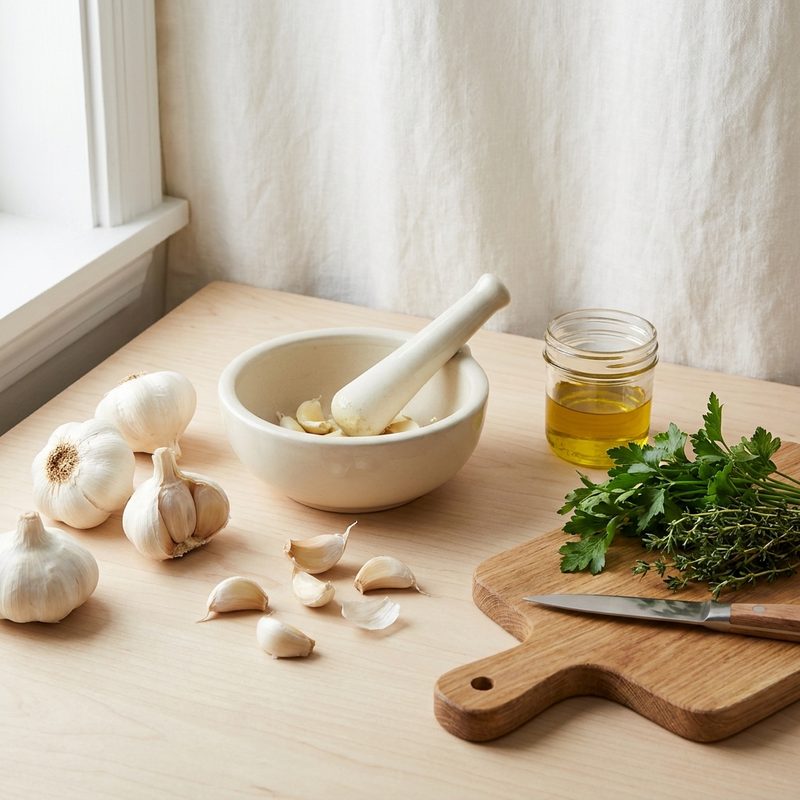
To understand garlic, you must understand allicin. Garlic bulbs contain a compound called alliin and an enzyme called alliinase. In a whole, undisturbed clove, these two components are kept in separate compartments. It is only when the cell walls are ruptured—through chopping, crushing, or chewing—that they meet and react to create allicin. This sulfur-containing compound is responsible for the characteristic pungent aroma and flavor of fresh garlic.
The 'Chop and Wait' Technique
One of the most important skills in handling garlic is the 'chop and wait' method. Because the enzyme reaction takes a few moments to reach its peak, you should mince or crush your garlic and then let it sit on the cutting board for about 10 minutes before introducing it to heat. This rest period allows the maximum amount of allicin to be produced before the enzyme is deactivated by cooking temperatures.
Mechanical Methods: Crushing vs. Slicing
The intensity of garlic flavor and the concentration of its compounds depend on how much surface area you create. Slicing garlic thinly creates a mild, nutty flavor because fewer cells are ruptured. Crushing or pressing garlic with a garlic press or a mortar and pestle breaks significantly more cell walls, leading to a much higher release of allicin and a sharper, more aggressive bite. Choose your technique based on whether you want a subtle background note or a bold garlic punch.
Managing Heat and Degradation
Allicin is highly sensitive to heat. High temperatures, such as those used in deep frying or high-heat sautéing, can quickly destroy the enzyme alliinase and break down the allicin that has already formed. To preserve the nutritional profile and flavor, add garlic toward the end of the cooking process rather than at the beginning. If you are making a long-simmered sauce, consider adding a fresh clove of minced garlic just before serving to reintroduce the volatile compounds lost during the boil.
The Impact of Acidity
Acidity also plays a role in how garlic behaves. Introducing high-acid ingredients like lemon juice or vinegar immediately after crushing garlic can slow down or stop the enzymatic reaction. If you want a strong garlic flavor in a vinaigrette or marinade, let the crushed garlic sit for a few minutes before mixing it with acidic liquids.