Guide
Understanding Fermentation: Techniques for Nutritious Home-Fermented Foods
Fermentation is an ancient culinary art that uses microorganisms like bacteria and yeast to transform raw ingredients. This guide explains the science behind the process and provides practical steps for starting your own fermentation journey at home.
Understanding the Fermentation Process
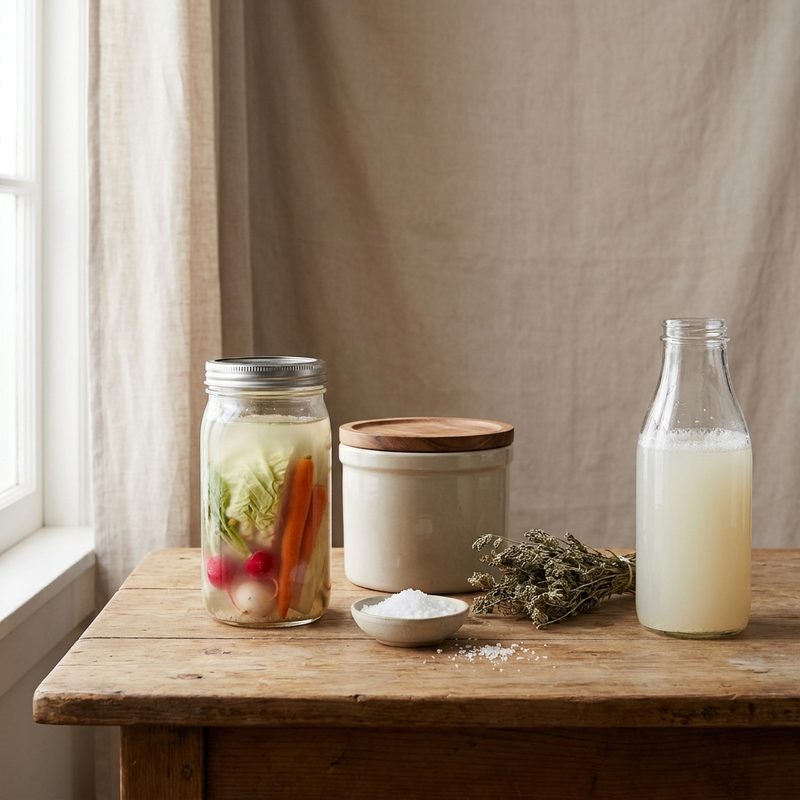
Fermentation occurs when microorganisms like bacteria, yeast, or fungi break down carbohydrates—such as starch and sugar—into acids, gas, or alcohol. In the context of vegetables, this is usually 'Lacto-fermentation,' where Lactobacillus bacteria convert sugars into lactic acid. This acid acts as a natural preservative and gives fermented foods their characteristic tangy flavor. These foods typically contain live cultures and organic acids created during the transformation.
The Importance of Salt and Brine
Salt is the most critical tool in the fermenter's kit. It serves two purposes: it inhibits the growth of harmful spoilage bacteria and encourages the growth of salt-tolerant beneficial bacteria. For most vegetable ferments, a salt concentration of 2% to 3% of the total weight of the ingredients is ideal. You can achieve this by dry-salting (massaging salt into shredded vegetables to draw out their moisture) or by creating a brine (dissolving salt in water) for whole or chunky vegetables.
Creating an Anaerobic Environment
Most vegetable fermentations require an anaerobic environment, meaning one without oxygen. When vegetables are exposed to air, they are susceptible to mold. To prevent this, you must keep your ingredients completely submerged under the liquid (either the vegetable's own juices or a prepared brine). Using fermentation weights or even a smaller glass jar filled with water can help keep the vegetables pressed down beneath the surface.
Step-by-Step Technique for Basic Sauerkraut
To begin, thinly slice a head of cabbage and weigh it. Calculate 2% of that weight in sea salt. Place the cabbage in a large bowl, sprinkle the salt over it, and massage it vigorously with clean hands for 5 to 10 minutes until it becomes limp and releases a significant amount of liquid. Pack the cabbage tightly into a clean glass jar, pressing down firmly to remove air pockets. Ensure the liquid rises above the cabbage. Apply a weight, cover the jar with a breathable cloth or an airlock lid, and let it sit at room temperature out of direct sunlight for 1 to 4 weeks, tasting periodically until it reaches your preferred tanginess.
How Heat Affects Fermented Foods
It is important to understand that fermented foods change significantly when cooked. The live cultures found in raw fermented foods are sensitive to heat; temperatures above 115°F (46°C) generally neutralize these microorganisms. While cooking fermented foods like kimchi or sauerkraut changes their nutritional profile by eliminating the live bacteria, the organic acids and flavor compounds remain, still contributing a unique depth to your dishes.