Guide
The Ultimate Guide to Cooking Beans, Lentils, and Pulses
This guide explores the essential world of pulses, explaining their nutritional profile and the chemical changes that occur during cooking. Master the techniques for preparing dried legumes to enhance texture and flavor in your everyday meals.
Understanding the Pulse Family
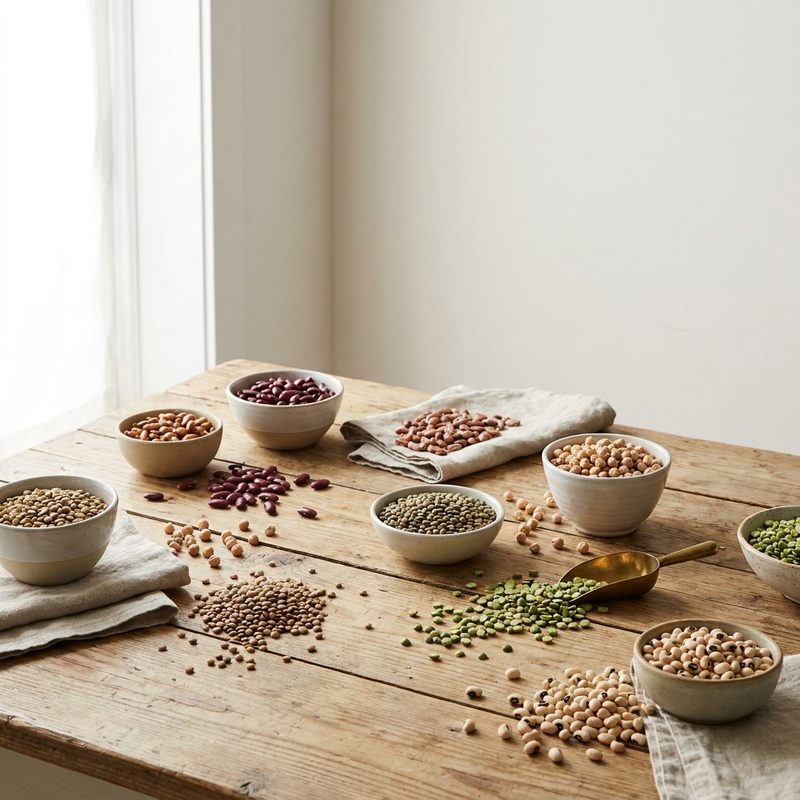
Pulses are the edible seeds of plants in the legume family, including dried beans, lentils, chickpeas, and peas. Nutritionally, they are powerhouses containing high levels of plant-based protein, complex carbohydrates, and dietary fiber. They are also rich in essential minerals like iron, magnesium, and potassium, as well as B-vitamins like folate. Because they are low in fat and have a low glycemic index, they provide sustained energy without rapid spikes in blood sugar.
The Science of the Cooking Process
When you cook pulses, two major transformations occur. First, the starch granules inside the seed absorb water and swell, a process known as gelatinization. Second, the heat breaks down the hemicellulose and pectin in the cell walls, which is what turns a hard, dried bean into a soft, creamy ingredient. Cooking also neutralizes certain antinutrients, such as lectins, making the pulses easier for the body to process and allowing for better nutrient absorption.
Step 1: Sorting and Rinsing
Before any cooking or soaking begins, spread your dried pulses out on a light-colored surface or baking sheet. Scrutinize them for small stones, debris, or shriveled beans that may have bypassed the mechanical sorting process. Once cleared, place them in a colander and rinse thoroughly under cold running water to remove dust and surface impurities.
Step 2: The Soaking Technique
Most larger beans benefit from soaking to reduce cooking time and ensure even hydration. You can use the 'Long Soak' method by covering beans with three times their volume of water and leaving them for 8 to 12 hours. Alternatively, the 'Quick Soak' involves bringing the beans and water to a boil, boiling for two minutes, and then letting them sit off the heat for one hour. Note that most lentils and split peas are small enough that they do not require soaking and can be cooked directly after rinsing.
Step 3: Simmering for Texture
Place your soaked (and drained) beans or dry lentils into a heavy-bottomed pot. Cover with fresh water—about two inches above the line of the pulses. Bring the water to a gentle boil, then immediately reduce to a low simmer. Avoid a vigorous boil, as the agitation can break the skins and result in a mushy texture. Skim off any foam that rises to the surface during the first few minutes of cooking.
Step 4: Seasoning and Finishing
For the best flavor, add aromatics like garlic cloves, bay leaves, or onion halves to the cooking water from the start. However, timing is critical for salt and acids (like lemon juice or tomatoes). Adding salt or acid too early can toughen the skins of the pulses, preventing them from softening. Wait until the pulses are nearly tender before seasoning the water with salt or adding acidic ingredients.