Guide
A Culinary Guide to Identifying and Managing Added and Free Sugars
Navigating the world of sweeteners can be confusing for any home cook. This guide clarifies the differences between added and free sugars, explains how processing changes sugar profiles, and provides practical techniques for mindful cooking.
Decoding the Definitions
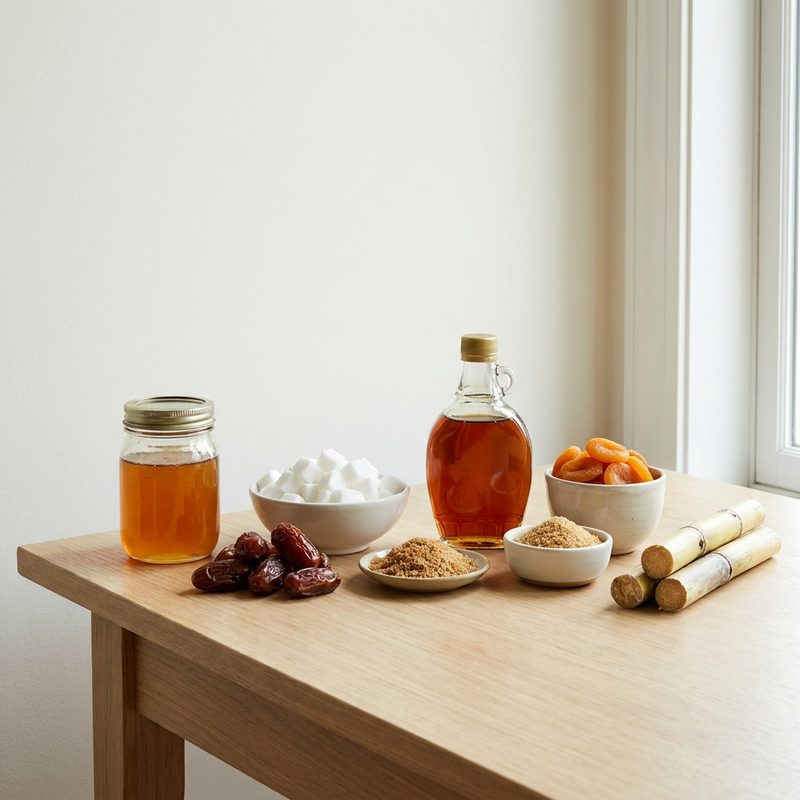
Before you can manage sugar in your cooking, you must understand the terminology. "Natural sugars" are those found inherently within the structure of whole foods like fruit (fructose) and milk (lactose). "Added sugars" are any sweeteners put into a food during preparation or processing, such as granulated sugar, corn syrup, or brown rice syrup. "Free sugars" is a broader category that includes all added sugars plus those naturally occurring in honey, syrups, and fruit juices. Essentially, once a sugar is no longer "locked" inside a piece of fruit or vegetable fiber, it is considered free.
Identifying Hidden Sources in the Pantry
Many savory ingredients are significant sources of free sugar. Condiments like ketchup, barbecue sauce, and pre-made salad dressings often contain high amounts of added sweeteners to balance acidity. When auditing your pantry, look for ingredients ending in "-ose" (like glucose or sucrose) or concentrated syrups. Even ingredients perceived as "healthy," such as balsamic glaze or flavored yogurts, frequently contain substantial amounts of free sugars that are added during the manufacturing process.
The Impact of Processing and Cooking
The way you handle an ingredient changes its sugar classification. When you eat a whole orange, you are consuming intrinsic sugars. When you squeeze that orange into a glass of juice, you have created a source of free sugar because the fiber has been removed. Similarly, pureeing fruit for sauces or smoothies breaks down the cellular structure, releasing those sugars. In the kitchen, techniques like reduction—simmering a liquid to thicken it—concentrate the sugars, resulting in a higher sugar-to-volume ratio in the finished sauce or glaze.
Step-by-Step Reduction Techniques
To reduce free sugars without losing flavor, start with your base ingredients. Instead of buying pre-sweetened stocks or sauces, make your own so you can control the sugar input. In baking, you can often reduce the sugar content by 25% without affecting the chemistry of the rise. For the remaining sweetness, lean on "sweet" spices like cinnamon, nutmeg, and vanilla. These aromatics provide a sensory illusion of sweetness. Additionally, using techniques like roasting vegetables (like carrots or onions) allows their natural sugars to caramelize, providing deep flavor that eliminates the need for added glazes.